Cricket Analytics Platform
Executive Summary
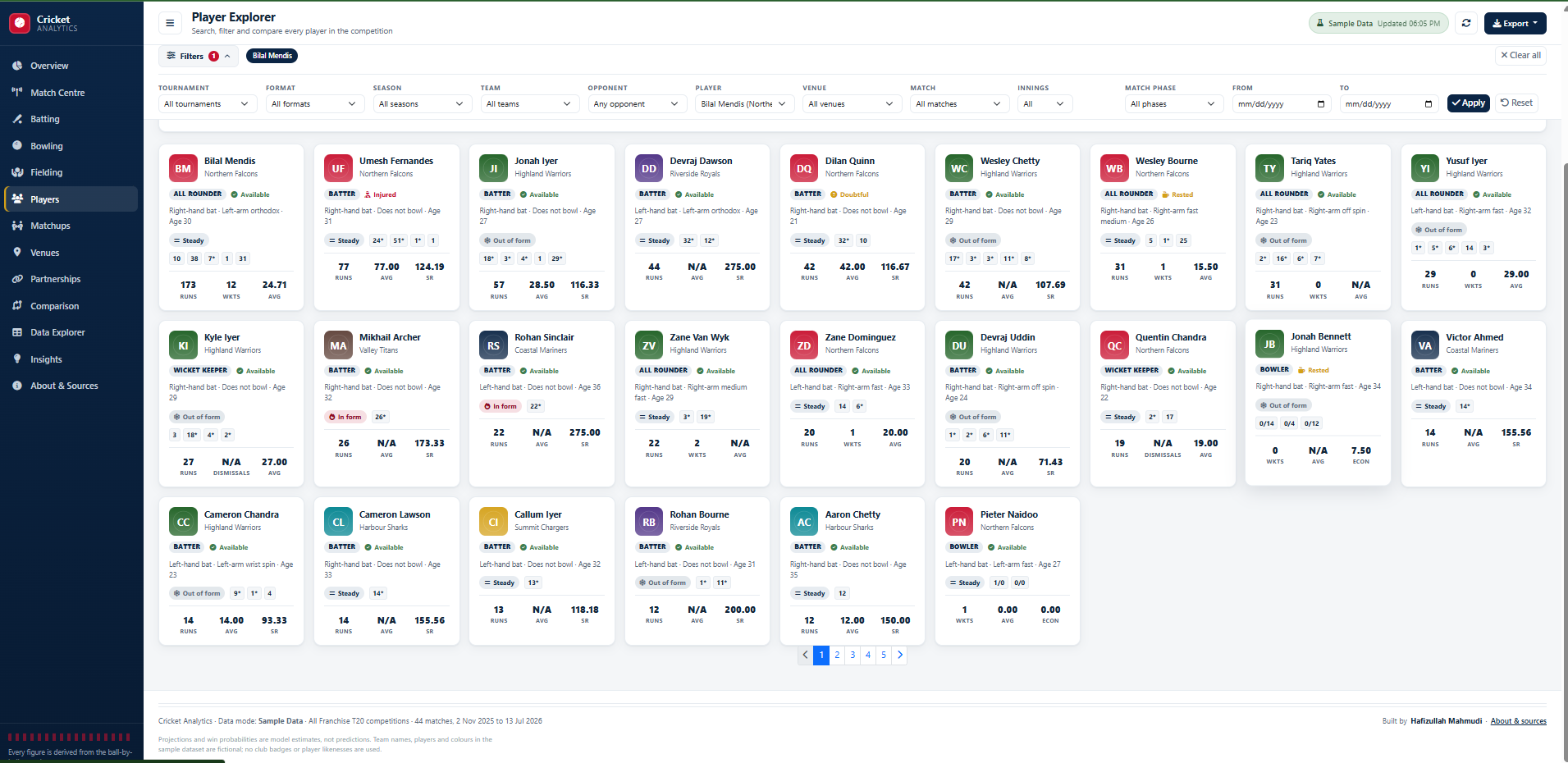
A full-stack cricket analytics platform that turns raw ball-by-ball match data into decision-ready
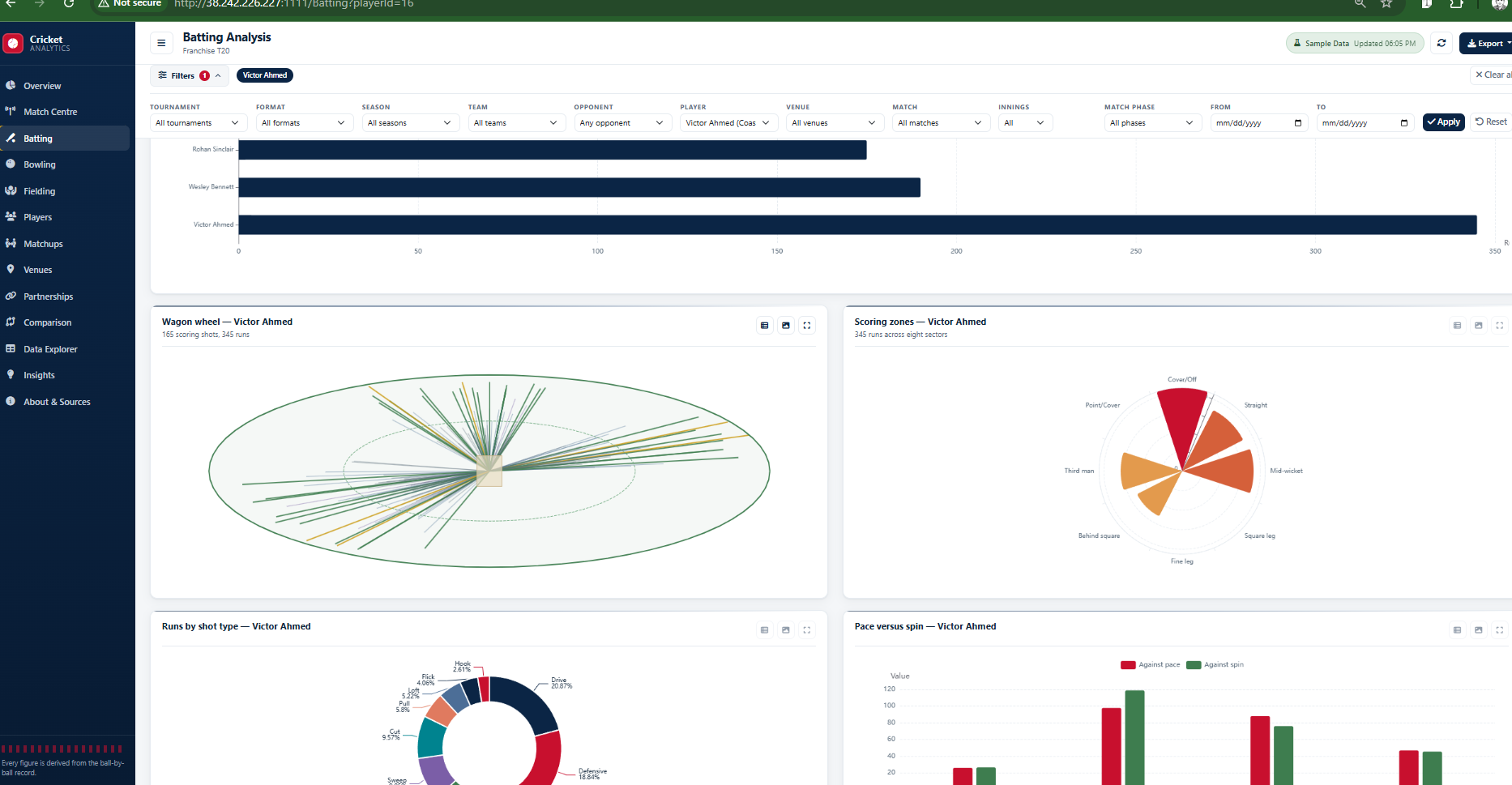
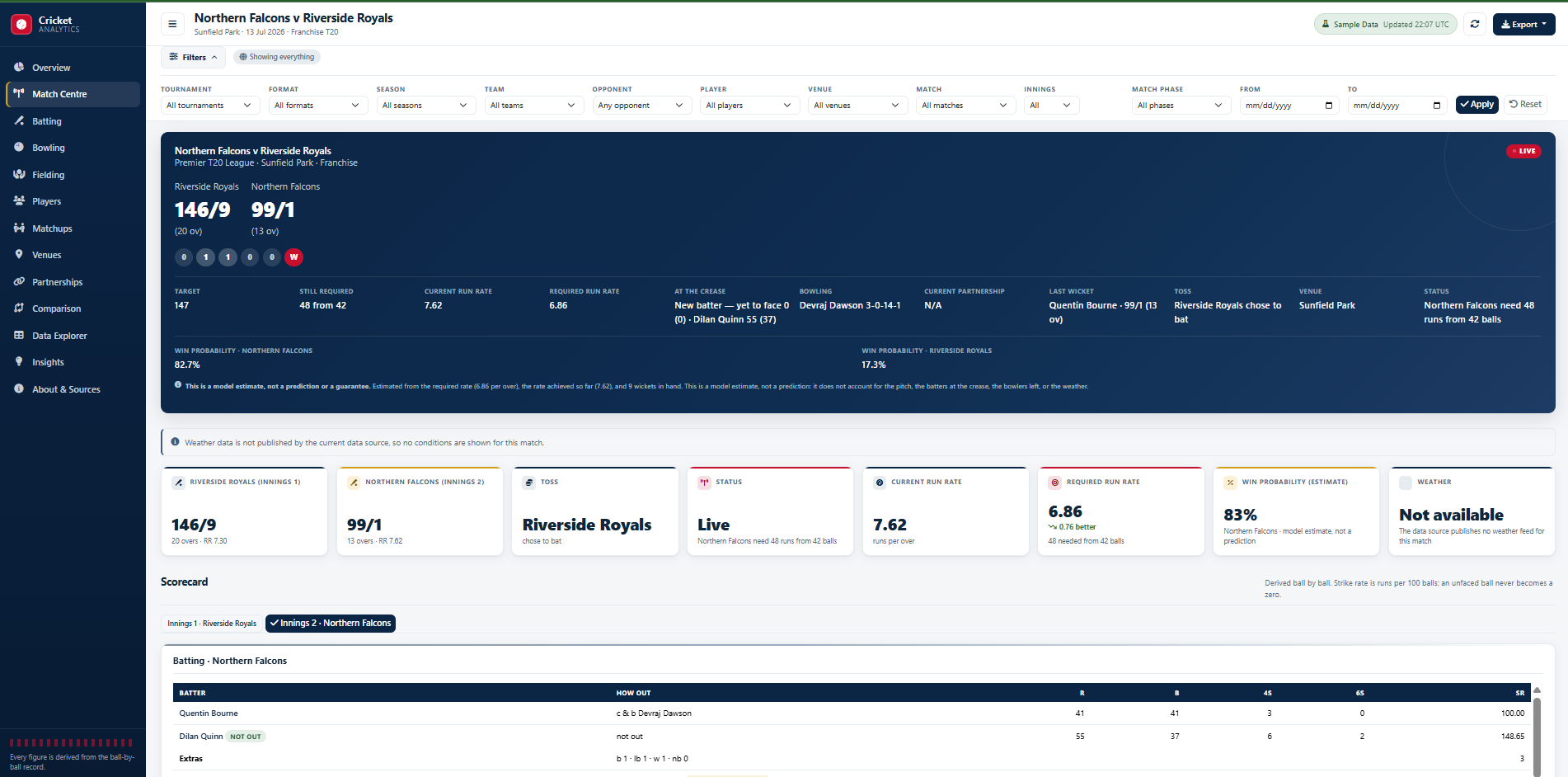
insight for coaches, analysts and selectors. Spanning fourteen interactive pages — from a live match
centre to batting, bowling, fielding, venue and head-to-head analysis — the platform derives every
statistic, chart and finding directly from the delivery record, so that no two figures on the screen
can ever disagree. It is built to connect to a live cricket data feed, and ships with a complete,
internally consistent dataset so it is fully functional out of the box.
About the Project
Cricket generates an enormous amount of data — every single delivery in a match carries the bowler,
the batter, the runs, the extras, the dismissal, where the ball pitched and where it was hit. The
difficulty is not collecting it; it is turning it into something a coach can act on before the next
match.
This platform was built to close that gap. By treating the ball-by-ball record as the single source
of truth and deriving every scorecard, partnership, aggregate and insight from it, the application
guarantees that the numbers reconcile by construction rather than by convention. A batter's individual
score and his team's total are two views of the same data — they are incapable of contradicting each
other. On top of that foundation sits a rule-based insight engine that reads the data and reports what
it finds, together with the evidence for each claim, so that every figure on the screen can be traced
back to the deliveries that produced it.
Purpose of the Dashboard
-
Single Source of Truth: Established the ball-by-ball delivery record as the only stored fact,
with every scorecard, partnership, fall-of-wicket and aggregate derived from it. This removes an
entire class of reporting error in which two independently calculated figures quietly drift apart. -
Domain-Accurate Cricket Metrics: Implemented the calculation layer against cricket's real rules
rather than its apparent ones — base-6 over notation, bowler attribution of wickets, the four-way
classification of extras, and the safe handling of undefined averages. Each rule is enforced by a
dedicated automated test. -
Format-Aware Analysis: Made match-phase definitions configurable per format, so that T20, ODI
and Test cricket are each analysed on their own terms. Analysis that does not apply to a format is
hidden rather than presented misleadingly. -
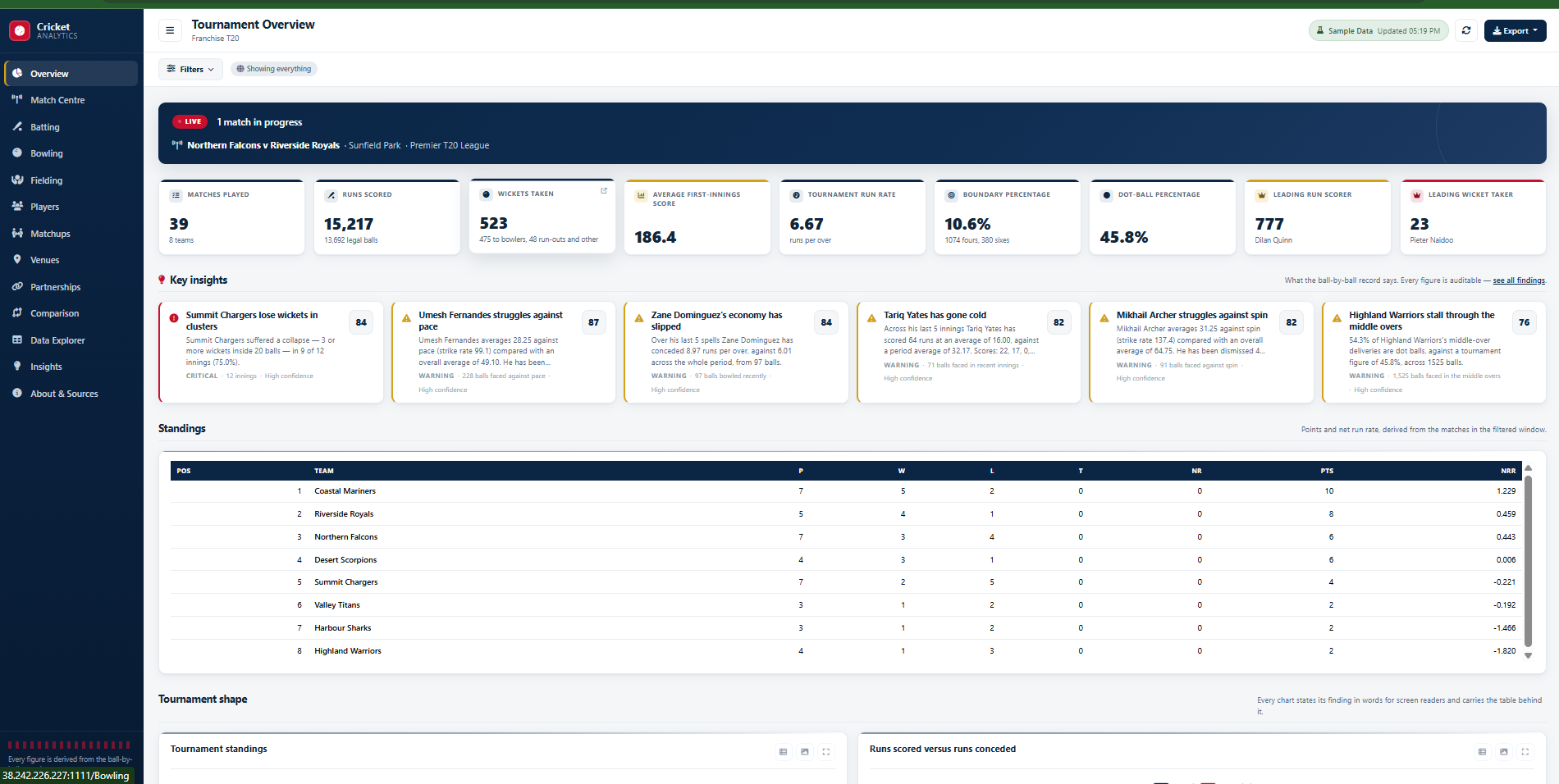
Automated Insight Generation: Built a deterministic rule engine that surfaces tactical findings
— a batter vulnerable to spin, a side that loses wickets in clusters, a venue that favours batting
first — without requiring any external AI service. -
Evidence and Auditability: Attached a transparent evidence score to every insight, and a link
from every claim back to the deliveries behind it, so that findings can be verified rather than
taken on trust. -
Operational Resilience: Designed a data-provider layer with caching and graceful fallback, so
that the dashboard remains usable during an upstream feed outage — and always states honestly which
data source the user is currently looking at.
Screenshots & Demos